Source refillable deodorant container for skincare, hair oils, and perfumes
Compare 30 options for refillable deodorant container designs including round and rectangular shapes with press or screw caps. Buyers can evaluate materials like PP and PE, volume capacities ranging from 4.5g to 100ml, and customization services for logos and colors.
Key considerations
Products List








Comprehensive Sourcing Guide
Strategic Sourcing Guide for Refillable Deodorant Containers
The global shift toward sustainable packaging has elevated the demand for refillable deodorant containers, transforming them from niche items into core components of modern cosmetic supply chains. For procurement professionals, sourcing these units requires a nuanced understanding of material science, manufacturing capabilities, and supply chain logistics. The market offers a diverse array of options, ranging from press-cap mechanisms to screw-top designs, each serving specific functional and aesthetic requirements. This guide provides a structured approach to evaluating suppliers and selecting the right container solutions based on verified product attributes and industry standards.
Material Composition and Structural Integrity
The foundation of any reliable deodorant container lies in its material composition. The primary materials observed in the current market are Polypropylene (PP) and Polyethylene (PE), often used in combination to balance rigidity with flexibility. PP is frequently cited for its chemical resistance and ability to maintain structural integrity under varying temperatures, which is critical for deodorant sticks that may be exposed to heat during shipping or storage. PE offers a degree of softness and impact resistance, making it suitable for specific closure mechanisms.
When evaluating potential suppliers, buyers must verify the specific plastic type used. While some listings specify "Plastic" generally, high-quality sourcing requires confirmation of whether the material is virgin PP, recycled PP, or a blend. The material choice directly influences the container's ability to hold the product without leaching or deforming. Furthermore, the thickness of the plastic walls is a variable that suppliers may list as "other" or provide specific measurements for. Thicker walls generally offer better protection against crushing but increase material costs and shipping weight. Buyers should request material data sheets to confirm the specific polymer grade and ensure it meets food-grade or cosmetic-grade safety standards, even if specific certification numbers are not immediately visible in general product listings.
Design Specifications and Functional Variations
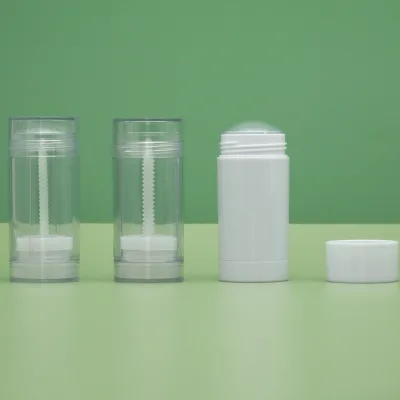
Deodorant containers are not monolithic; they come in various shapes, sizes, and closure types designed to accommodate different product formulations. The observed market data highlights a clear distinction between round and rectangular profiles. Round containers, often associated with traditional stick deodorants, typically utilize a press cap or screw cap mechanism. The press cap is a common feature for stick products, allowing for a smooth dispensing action, while screw caps provide a tighter seal, which is beneficial for liquid or gel formulations.
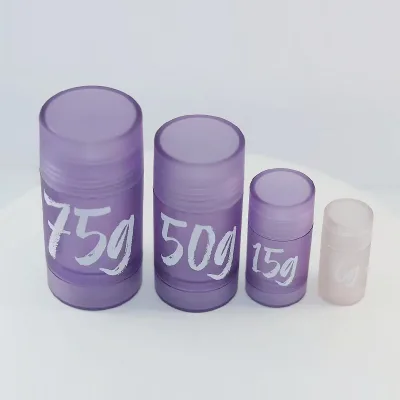
Size standardization is another critical specification. The market supports a wide range of capacities, including 15g, 20g, 30g, 50g, 75g, 85g, and 95g for solid sticks. For liquid or roll-on variants, capacities range from 20ml up to 100ml, with specific models supporting volumes like 4.5g, 6g, 14g, and 30g. The shape of the container also dictates the internal mechanism; rectangular bottles are often paired with roll-on applicators, whereas round bottles are standard for push-up stick mechanisms.
Buyers must carefully match the container model to their product viscosity. A model designed for a 30g stick may not function correctly with a 50g formulation if the internal threading or spring mechanism differs. Specific model numbers, such as CT2308, CT2520, WK-R-21, XS-BT041, GY-DS01B, and GY-DS03, represent distinct engineering designs. When sourcing, it is essential to verify that the selected model number aligns with the intended volume and application, rather than assuming interchangeability across different product lines.
Customization and Branding Capabilities
One of the primary advantages of sourcing from manufacturers in regions like Zhejiang, China, is the extensive availability of customization services. Most suppliers in this sector offer robust OEM (Original Equipment Manufacturer) and ODM (Original Design Manufacturer) capabilities. This allows brands to differentiate their products through unique shapes, colors, and surface finishes.
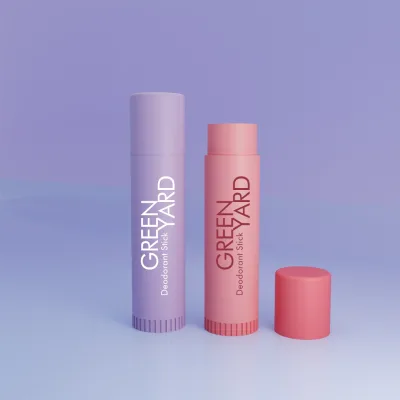
Color customization is a standard offering, with suppliers capable of producing containers in specific shades like pink or blue, or accommodating custom color requests to match brand identity. Surface handling techniques are equally diverse, including screen printing, hot stamping, and the application of labels. Advanced decoration methods such as painting, electroplating, and UV coating are also available for premium packaging lines.
The extent of customization often correlates with the Minimum Order Quantity (MOQ). While some suppliers may offer lower MOQs for standard colors, custom tooling or complex surface treatments typically require higher volume commitments. Buyers should expect MOQs to vary significantly, with observed ranges starting from as low as 5 units for sample evaluation up to 30,000 units for full production runs. Specific high-volume orders may have MOQs set at 5,000 or 20,000 pieces. It is crucial to negotiate these thresholds early, as they directly impact the unit cost and the feasibility of launching a new product line.
Compliance, Certification, and Quality Assurance
While specific certification statuses like FSC, ISO 14001, or ISO 9001 may be mentioned in broader industry contexts, buyers must not assume a supplier possesses these certifications without direct verification. The absence of explicit certification data in product listings means that compliance must be treated as a verification step rather than a given attribute.
For cosmetic and personal care products, the container must be chemically inert and safe for direct contact with the skin. Buyers should request documentation proving that the PP or PE materials used are compliant with relevant regional regulations, such as those from the FDA or EU Commission. Quality control processes should be a central part of the supplier evaluation. This includes verifying the consistency of the molding process to ensure no flash or burrs exist on the threads, which could compromise the seal.
Testing the closure mechanism is also vital. A screw cap or press cap must withstand repeated opening and closing without stripping or loosening. Suppliers often provide free samples to facilitate this testing, with lead times for samples typically ranging from 7 days. However, the lead time for mass production is a separate metric, often cited between 15 to 20 days. Buyers must account for these timelines when planning product launches, ensuring that the production schedule allows for adequate quality testing before the final shipment.
Cost Drivers and Procurement Logistics
The cost of refillable deodorant containers is influenced by several dynamic factors. The primary driver is the material cost, which fluctuates with the global price of petroleum derivatives. The complexity of the mold design also plays a significant role; intricate shapes or specialized mechanisms like roll-on balls increase the tooling and manufacturing costs. Additionally, the level of customization, such as multi-color printing or special surface finishes, adds to the per-unit price.
Logistics and packaging are equally important considerations. Most suppliers utilize standard carton packing for bulk shipments, which protects the containers during transit. However, the origin of the product, typically Zhejiang, China, implies specific shipping routes and potential tariffs that must be factored into the total landed cost. Buyers should also consider the volume efficiency of the packaging; rectangular containers may stack more efficiently than round ones, potentially reducing shipping costs per unit.
When evaluating the price range, observed figures in the market span from $0.05 to $2.66 per unit. This wide variance reflects the differences in material quality, size, and customization level. Low-cost options may be suitable for high-volume, basic product lines, while higher-priced units are justified for premium brands requiring specific aesthetic or functional attributes.
Supplier Evaluation and Long-Term Partnership
Selecting a supplier for refillable deodorant containers requires a holistic approach that goes beyond price. The supplier's location, specifically within Zhejiang, China, suggests a mature ecosystem of plastic molding and packaging manufacturers. However, the ability to deliver consistently is paramount. Buyers should assess the supplier's capacity to handle the required order volumes, noting that some suppliers have MOQs as high as 20,000 pieces, which may be a barrier for startups.
The availability of free samples is a strong indicator of a supplier's confidence in their product quality. A reputable supplier should be willing to provide samples within a short timeframe, typically around 7 days, to allow for rigorous testing. Furthermore, the willingness to accommodate OEM/ODM requests, including logo printing and specific color matching, demonstrates flexibility and a customer-centric approach.
Long-term procurement considerations include the supplier's ability to scale production and maintain quality consistency. As the brand grows, the supplier must be able to increase output without compromising the integrity of the container. Establishing a clear communication channel for quality issues and ensuring that the supplier adheres to agreed-upon specifications for volume, shape, and closure type is essential for a sustainable partnership.
Summary of Key Specifications and Market Data
To assist in the decision-making process, the following table summarizes the key attributes observed in the current market for refillable deodorant containers. This data serves as a reference point for comparing potential suppliers and defining procurement requirements.
| Attribute Category | Observed Specifications & Options |
|---|---|
| Material | PP, PE, General Plastic |
| Closure Type | Press Cap, Screw Cap |
| Shape | Round, Rectangular |
| Volume/Weight | 4.5g, 6g, 14g, 15g, 20g, 30g, 40g, 50g, 75g, 85g, 95g; 20ml-100ml |
| Color Options | Pink, Blue, Customizable |
| Customization | OEM/ODM Available, Logo Printing, Screen Printing, Hot Stamping |
| MOQ Range | 5 to 30,000 PCS (Specific examples: 5,000, 20,000) |
| Sample Policy | Free samples supported (Lead time approx. 7 days) |
| Production Lead Time | 15-20 Days |
| Packing | Standard Carton Packing |
| Origin | Zhejiang, China |
| Applications | Deodorant, Skincare, Perfumes, Hair Oils, Essential Oils |
By adhering to these guidelines and verifying the specific attributes against supplier capabilities, buyers can secure high-quality refillable deodorant containers that meet both functional and brand requirements. The key to successful sourcing lies in detailed specification matching, rigorous quality verification, and establishing clear communication channels with suppliers who demonstrate the flexibility to meet evolving market demands.
FAQs
What materials are used for refillable deodorant containers?
These containers are primarily made from PP and PE plastics to ensure durability and chemical resistance. Some listings specify general plastic types, while others confirm PP for structural integrity in varying temperatures.
Which closure types are available for these containers?
Both press caps and screw caps are available depending on the specific model and application. Round containers often use press caps for sticks, while screw caps provide tighter seals for liquid formulations.
Can I get free samples for testing before bulk orders?
Yes, free samples are supported by many suppliers to facilitate product testing. These samples are typically available within 7 days to allow for verification of closure mechanisms and material quality.
What is the minimum order quantity for custom production?
MOQs vary significantly, ranging from 5 units for samples up to 30,000 pieces for full production runs. Specific high-volume orders may require minimums of 5,000 or 20,000 pieces depending on customization needs.
How long does production take after sample approval?
The standard lead time for mass production is typically between 15 to 20 days. This timeline allows for molding, surface handling like screen printing, and standard carton packing before shipment.
What volume capacities are offered for these containers?
Capacities range from 4.5g to 95g for solid sticks and 20ml to 100ml for liquid roll-ons. Specific models support volumes such as 15g, 30g, 50g, and 75g to match different product formulations.
Are OEM and ODM services available for branding?
Yes, OEM and ODM services are widely available to support custom branding and design. Suppliers offer customization for colors, logos, and surface finishes like screen printing, hot stamping, and UV coating.